
Why Black and White Photography Belongs in Your Destination Wedding Gallery
When you book a destination wedding in Mexico, you are usually chasing the color. You want the electric turquoise of the Caribbean Sea, the lush emerald of the jungle, and the vibrant pinks of the bougainvillea. It is completely natural to expect your gallery to be a rainbow of tropical hues. However, when you receive your final collection from me, you will notice that a significant portion—usually around 30%—of the images are in black and white. This isn't an accident, and it certainly isn't because I forgot to edit the color. It is a deliberate artistic choice designed to strip away the noise and get straight to the heart of the memory.
In a world obsessed with filters and saturated feeds, black and white wedding photography offers something that color simply cannot: undistracted emotion. When we look at a color photograph, our brains are busy processing the data—the shade of the bridesmaids' dresses, the blue of the sky, the tan of the sand. Color is beautiful, but it can also be a distraction. By removing the color spectrum, we force the eye to focus on the composition, the lighting, and, most importantly, the expression on your faces. As a destination wedding photographer in Cancun, my goal is to give you photos that make you feel, not just photos that show you what the beach looked like.
Stripping Away the Distractions
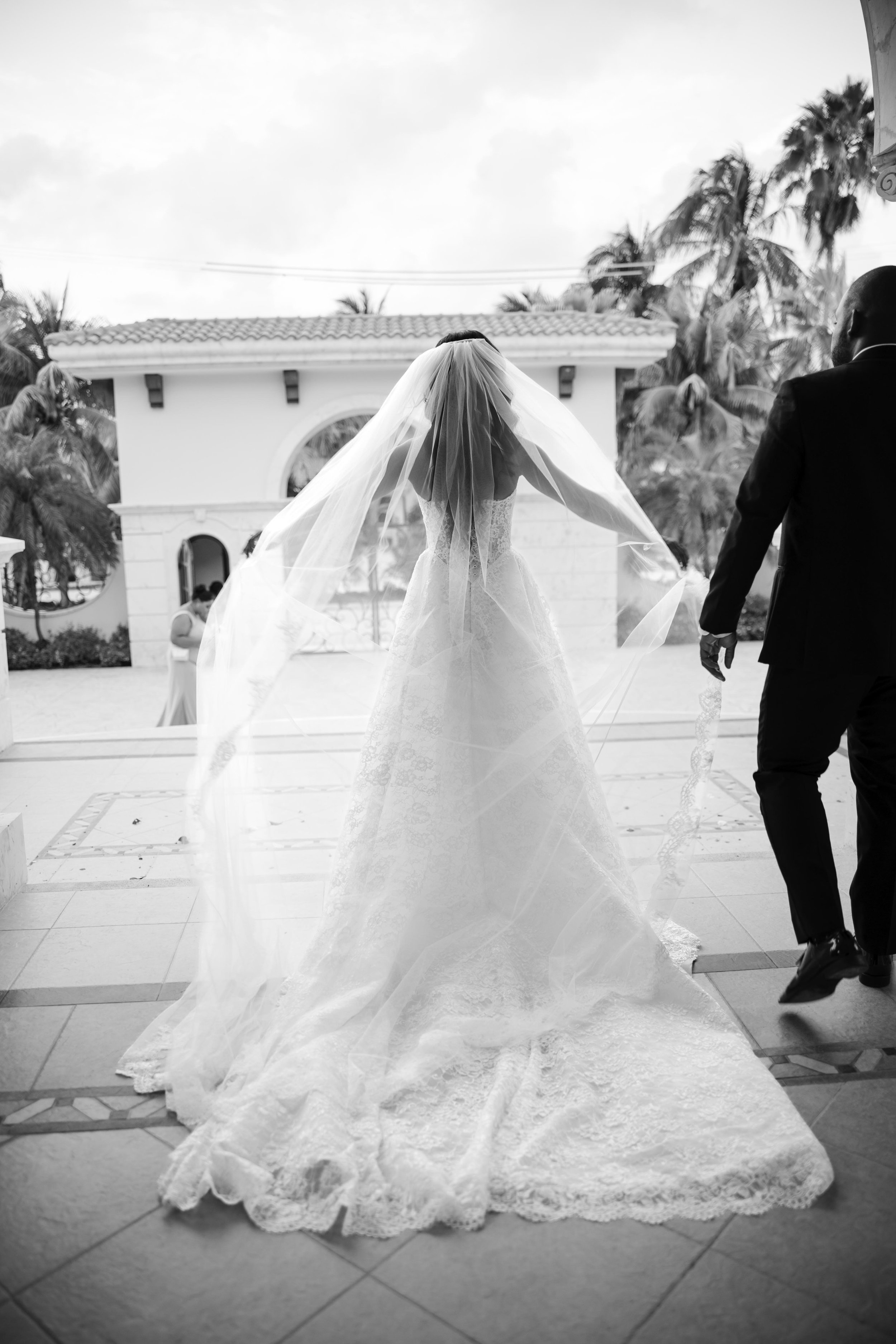
Destination weddings are visually chaotic. While the ocean is stunning, there are often elements we can't control: a bright orange safety cone in the distance, a guest wearing a neon green shirt in the background, or the red glow of an exit sign at the reception venue. In a color photograph, these elements scream for attention and pull the viewer's eye away from the main subject—you. In black and white, however, that neon shirt becomes a subtle shade of gray. The distraction dissolves, allowing the moment between the bride and groom to take center stage.
This is particularly important during the reception. DJ lights can be unforgiving, often casting purple, green, or magenta lasers across your face during the first dance. In color, this can look messy and alien. In black and white, those harsh colored lights transform into dramatic beams of contrast and texture. They add to the energy and atmosphere of the party without ruining your skin tones. By processing these images in monochrome, I can save a moment that might otherwise be ruined by "bad" artificial lighting, turning it into a classic, rock-and-roll style image that looks timeless.
The Language of Emotion
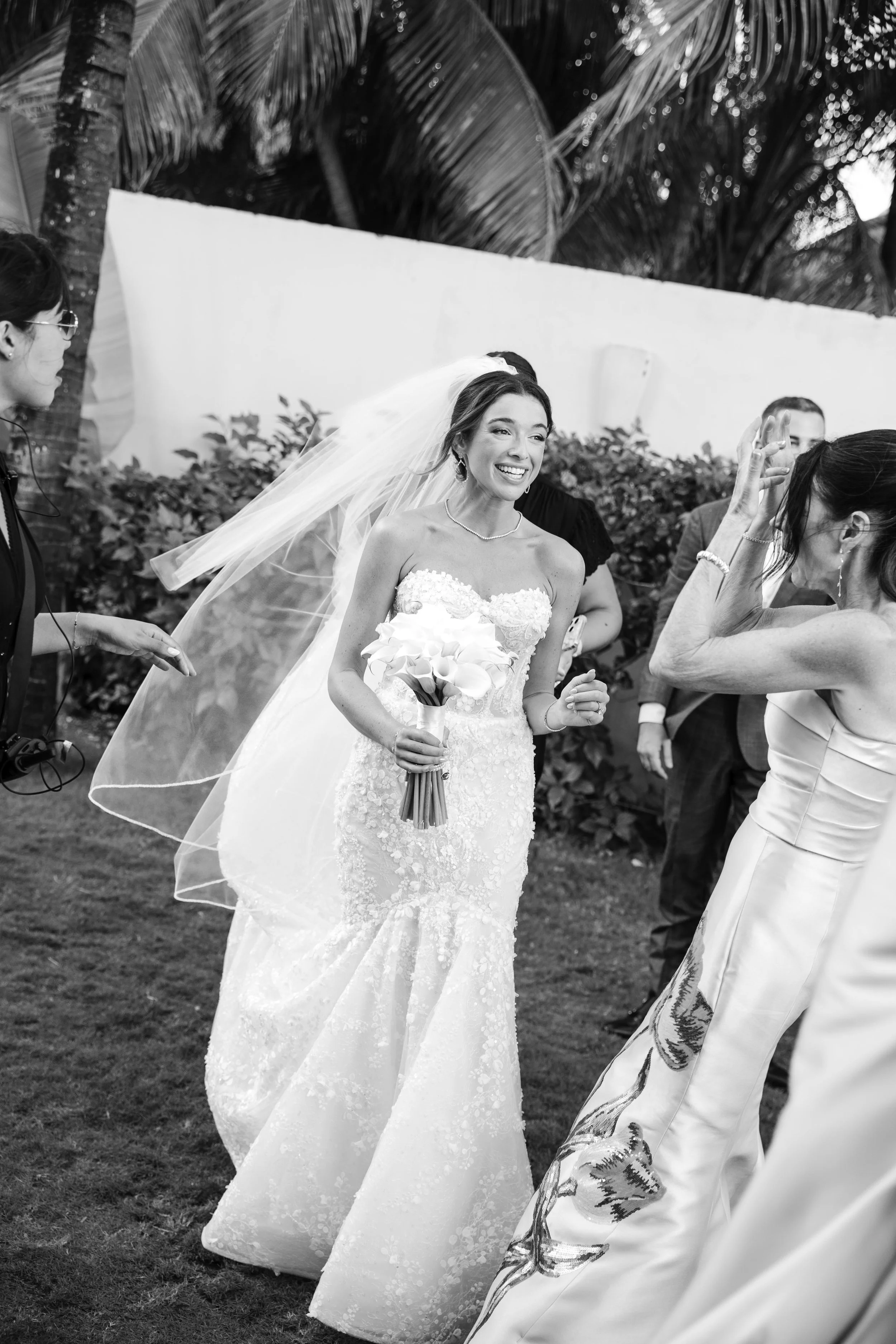
There is a reason why photojournalists and documentary photographers have relied on black and white for decades. It is widely accepted in the art world that monochrome conveys emotion more effectively than color. Without the "information" of color, the brain focuses on the human connection—the tear rolling down a cheek, the veins in a hand holding another, or the crinkle of a nose during a laugh. These textures of humanity are often smoothed over or lost when we are distracted by the vibrancy of the surroundings.
I often choose to edit the most emotional parts of the day—like the father-daughter dance or the reading of the vows—in black and white. I want you to remember how that moment felt, not just what color tie your dad was wearing. Magnum Photos, the legendary photography cooperative, often discusses how black and white photography allows the viewer to enter the image and connect with the subject on a subconscious level. It creates a sense of nostalgia instantly, making a photo taken yesterday feel like a piece of history.

Mastering the Harsh Mexican Sun
Let’s be real about the weather: the sun in Mexico is intense. If you are having a ceremony at 2:00 PM or even 4:00 PM, the light can be harsh, creating deep shadows under your eyes and bright highlights on your forehead. In color photography, this high contrast can sometimes look unflattering or jarring, as the skin tones can shift toward orange or yellow in the heat. This is where black and white shines as a technical savior.
Monochrome loves contrast. What looks like "bad" lighting in color often looks like dramatic, high-fashion editorial lighting in black and white. Those deep shadows become moody and mysterious, sculpting your cheekbones and adding depth to the image. Instead of fighting the harsh sun, I use black and white processing to embrace it, creating images that look bold and intentional rather than washed out. It allows me to deliver a consistent, high-quality gallery regardless of whether a cloud passed over the sun at the exact right second. You can see examples of how I handle different lighting scenarios on my Portfolio page.

Timelessness vs. Trends
Color trends fade. If you look at wedding photos from the 1970s, the sepia tones and muted colors scream "vintage." Even photos from five years ago often have "presets" applied that look dated today. Black and white wedding photography, however, is immune to trends. A monochrome photo taken in 1920 looks stylistically similar to one taken in 2026. It exists outside of time.
When you invest in a wedding gallery, you are investing in family heirlooms. You want images that your grandchildren can look at without laughing at the "retro" editing style. By ensuring a solid portion of your gallery is black and white, I am giving you images that are classic and elegant by default. They are the photos that usually end up framed on the mantle because they match every home decor style and simply never go out of fashion. ArchiSoup frequently highlights how black and white art elevates a space, noting its ability to add sophistication to any room.

A Curated Mix for the Perfect Story
I am not suggesting we ditch color entirely. Your destination wedding is vibrant, and you absolutely deserve those epic wide shots of the blue ocean and the golden sunset. However, a full gallery needs rhythm and flow. If every single image is a blast of bright saturation, it can be visually exhausting to look through 800 photos. Black and white images act as a "palate cleanser" for the eyes, providing moments of quiet and focus amidst the celebration.
When I curate your gallery, I make specific decisions about which images "deserve" color and which are stronger without it. I look for composition, emotion, and light. If a photo relies on the color of the flowers to be interesting, it stays color. If the photo is about the look in your groom's eyes when he sees you, it might go black and white. This intentional editing is part of the service I provide. If you want to see how this mix comes together in a full wedding story, browse the galleries on my main page.
Trust the Artist’s Eye
Ultimately, hiring a professional photographer is about trusting their vision. You aren't just hiring someone to press a button; you are hiring someone to interpret your day and present it back to you as art. Embracing the black and white portion of your gallery means embracing the raw, gritty, beautiful reality of your love story, stripped of all the superficial details.
If you are looking for a photographer who values emotion just as much as the epic landscape, let’s chat. I would love to capture the full spectrum of your day—in living color and timeless monochrome.