
Sunscreen for Wedding Photos: How the Wrong SPF Can Ruin Your Beach Wedding Gallery
I have photographed hundreds of weddings along the beaches of Cancun, Tulum, Playa del Carmen, and Los Cabos, and there is one sneaky gallery-killer that almost nobody warns couples about: sunscreen. Choosing the right sunscreen for wedding photos matters just as much as your makeup trial or your dress steaming appointment. I have watched flawless bridal makeup turn ghostly white the second my flash fired at a reception, all because of one ingredient hiding in an SPF bottle. So let me walk you through exactly what causes it, what I tell my couples to use instead, and how to keep your skin protected during a full week in the tropics without wrecking a single frame.
Why Sunscreen for Wedding Photos Is a Bigger Deal Than You Think
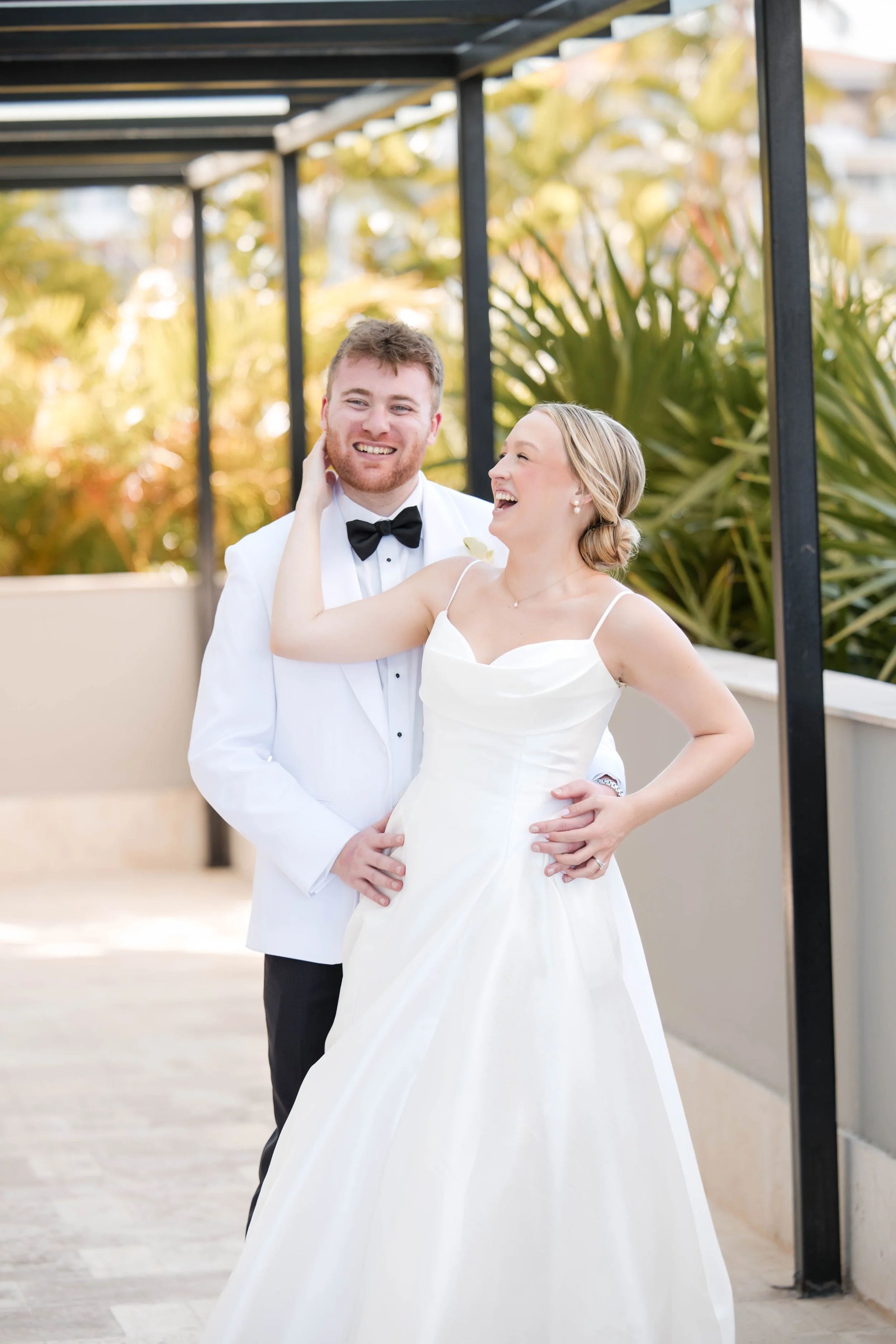
Here is the scenario I see a few times every season. The ceremony photos look gorgeous. Golden hour on the beach is dreamy. Then the sun goes down, the reception starts, my flash comes out, and suddenly the bride's face looks three shades lighter than her neck and chest. Sometimes it looks like a chalky mask. Sometimes it is a strange gray sheen across the forehead and cheekbones.
That effect is called flashback, and it happens when certain sunscreen ingredients reflect the light from my flash straight back into the camera. Your eyes never see it in the moment. Your friends at the reception never see it. But my camera absolutely does, and no amount of editing fully fixes a white cast from sunscreen in photos once it is baked into hundreds of reception images.
The frustrating part? It is completely preventable with about five minutes of label reading. As a destination wedding photographer in Cancun, I now bring this up in every planning call because it is that common and that easy to avoid.
The Ingredients Behind SPF Flashback in Flash Photography
SPF flashback in flash photography comes down to two mineral ingredients: zinc oxide and titanium dioxide. These are the workhorses of physical sunscreens. They sit on top of your skin and physically bounce UV rays away, which is exactly why dermatologists love them. The problem is that they do not only bounce UV light. They bounce visible light too, including the burst from my flash.
Zinc Oxide and Titanium Dioxide Are the Main Culprits
If your sunscreen says "mineral," "physical," or "reef-safe" on the front, flip it over. You will almost always find zinc oxide or titanium dioxide as active ingredients. On camera, those particles act like thousands of tiny mirrors on your face. The team at Swellies breaks down why sunscreen makes you look white in flash photos in more detail, and it matches exactly what I see through my lens at receptions from Los Cabos to the Riviera Maya.
Watch Out for SPF Hiding in Other Products
This is the one that catches people off guard. Flashback does not only come from sunscreen bottles. It hides in:
Foundations and tinted moisturizers labeled SPF 30 or higher
Setting powders with mineral UV filters
Primers marketed as "protective" or "outdoor ready"
Lip balms and hand creams your bridesmaids pass around before the ceremony
Tell your makeup artist you want zero SPF in your face products for the wedding day. Any experienced artist working beach weddings will know exactly why you are asking.

The Best Sunscreen for Wedding Photos: What I Tell My Cancun and Cabo Couples
Good news: you do not have to choose between sunburn and a bad gallery. The right sunscreen for wedding photos is a chemical formula, meaning it uses filters like avobenzone, homosalate, octisalate, or octocrylene instead of zinc and titanium. Chemical sunscreens absorb into the skin and absorb UV rays rather than reflecting light, so they photograph clean under flash.
What to Apply on the Wedding Day Itself
Here is my simple wedding day formula for couples getting married in the Mexican Caribbean sun:
Face: A lightweight chemical sunscreen applied in the morning, at least an hour before makeup. Let it fully absorb, then blot before your artist starts.
Body: Chemical SPF on shoulders, chest, arms, and back, especially for strapless or backless dresses. Apply it early so it does not transfer onto fabric.
Grooms too: Necks and ears burn fast during a 4 p.m. beach ceremony. Same rules apply.
If you want specific product ideas, RadiantCarePicks put together a solid roundup of photo-friendly sun care options for outdoor weddings that lines up with what I have seen perform well on camera.
Timing Matters as Much as the Formula
Apply everything at least 60 to 90 minutes before photos start. Fresh sunscreen sits on the surface and can cause shine or texture even when the formula itself is camera-safe. This is also why I build buffer time into every wedding day timeline I help my couples plan. Skin, makeup, and sunscreen all need time to settle before we start shooting.
Beach Wedding Skin Prep for the Whole Week in the Tropics
Most of my couples arrive three to five days before the wedding, and the biggest skin mistake happens before I ever pick up a camera: the pre-wedding sunburn. A lobster-red chest with a strapless gown is much harder to deal with than any flashback issue.
My beach wedding skin prep advice for the days leading up to the ceremony:
Days 1 to 3: Use whatever sunscreen you love, mineral included. Reapply every two hours, wear a hat, and stay out of the 11 a.m. to 2 p.m. sun. Tan lines from a swimsuit will show in your dress.
The day before: Skip the beach club marathon. Hydrate like crazy. The humidity in Tulum and Playa del Carmen dehydrates people faster than they expect.
Wedding morning: Chemical SPF only, applied early, blotted before makeup.
The day after: Go back to your mineral sunscreen guilt-free. If we are doing a day-after or trash-the-dress session, just repeat the wedding day rules.
The same rules apply if we are shooting your engagement session in Cancun before the big day. Any session that runs into blue hour means my flash comes out, and my flash does not forgive zinc.

Frequently Asked Questions
Can you fix sunscreen flashback in editing?
Partially, but not perfectly. I can tone down a mild white cast on a handful of images, but heavy flashback across hundreds of reception photos changes skin texture and color in ways editing cannot fully reverse. Prevention takes five minutes. Retouching takes forever and never looks quite right.
Is reef-safe sunscreen bad for wedding photos?
Most reef-safe formulas are mineral based, which means zinc oxide, which means flashback risk. My suggestion: use your reef-safe mineral sunscreen for swimming and snorkeling days, then switch to a chemical formula for the wedding day itself when you will be on the sand, not in the ocean.
Do guests and the wedding party need to worry about this too?
Yes, at least the people standing next to you all night. Parents, bridesmaids, and groomsmen show up in a huge percentage of your flash photos. I recommend putting a quick note in your welcome bags or group chat asking everyone to skip mineral SPF on their faces for the wedding day.
Your wedding gallery should look like the day actually felt: warm, glowing, and full of color, not chalky and washed out. At Arch Wedding Studio, I photograph destination weddings across Cancun, the Riviera Maya, Tulum, and Los Cabos, and part of my job is helping you sidestep little traps like this one long before they can touch your photos. If you are planning a beach wedding in Mexico and want a photographer who thinks about the details as much as you do, come say hi at archweddingstudio.com or send me a note through my inquiry page. I would love to hear what you are dreaming up.